Build the admin, so you're not the admin
If a client has to email you to change a number on their site, the site isn't finished. How we design admin pages for the people who'll actually use them.
- Written by
 MohammedCo-founder and CEO
- From the build
 Portsmouth
- Topic
- Development
- Published
- · 2 min read
The short version
- Anything that changes weekly should be editable without a developer.
- Design the admin for the real person using it.
- A few plain fields that publish instantly beat a full CMS.
A website that needs a developer to change a number isn't finished. Every small update becomes an email, a wait and an invoice, and before long the site goes stale because asking is too much effort.
So on most builds we design the admin alongside the site, for the person who will actually use it.
Portsmouth Muslim Academy
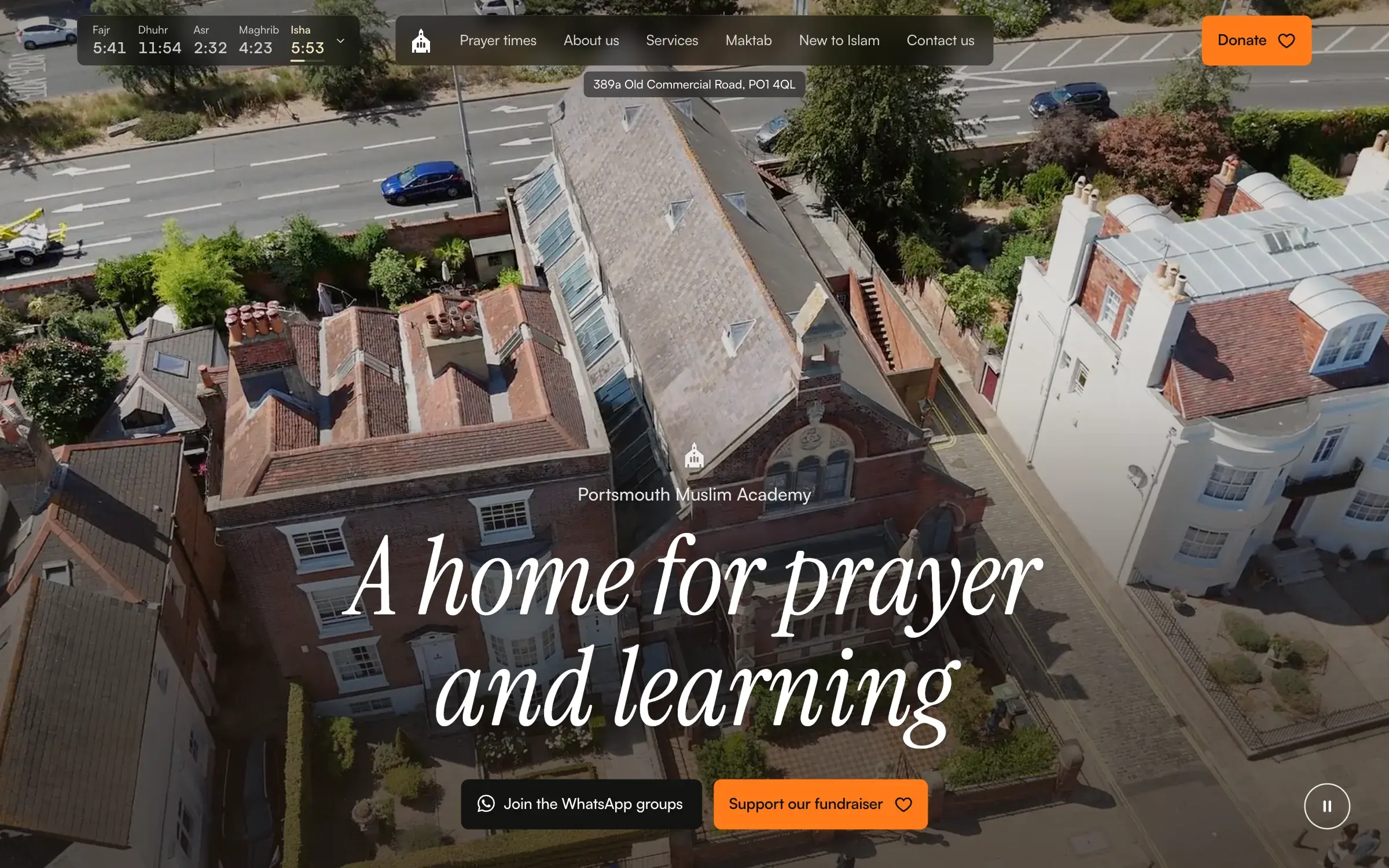
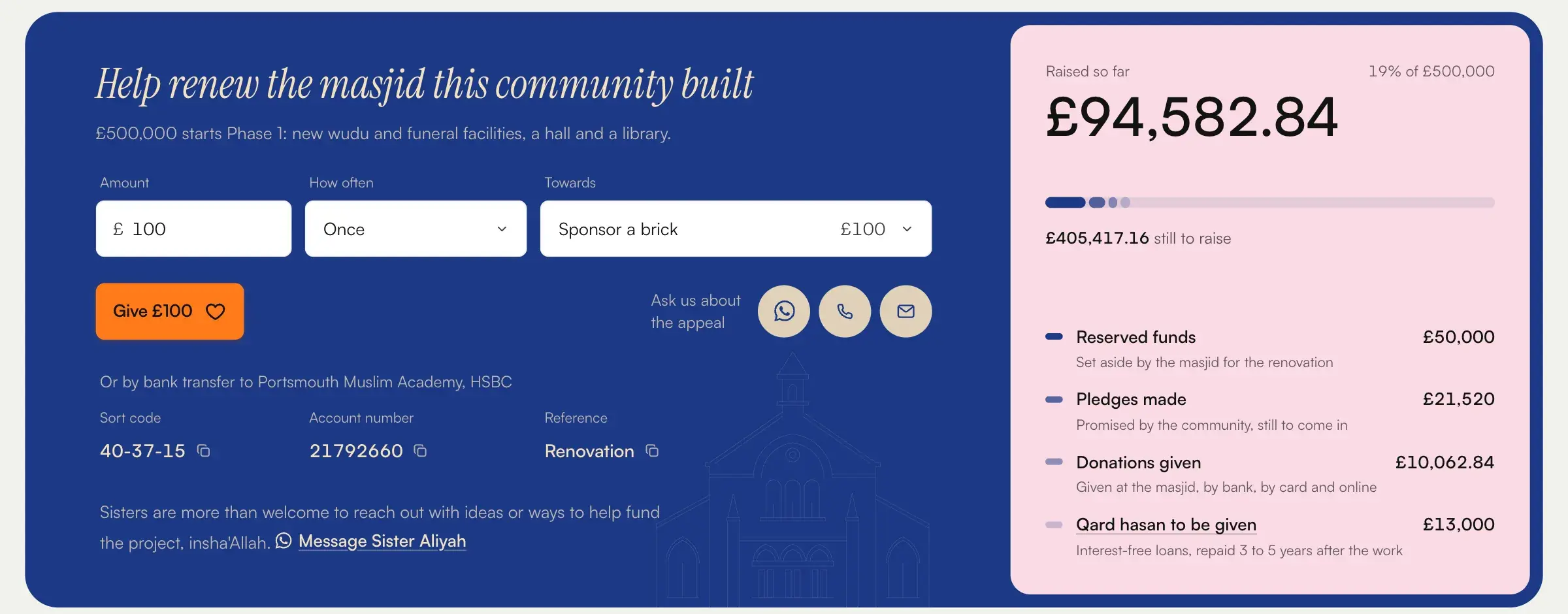
Portsmouth Muslim Academy has been a masjid in a Victorian chapel on Old Commercial Road since 2007. Its old site was a website-builder template: clip art, a table of bank details and a contact form. The new one puts prayer times and giving first, with a renovation appeal that shows its real total, line by line.
An appeal total that's out of date is worse than none. So the committee updates the appeal figures, photos and films from one admin page, with no code and no redeploy. A change goes live the moment they save it.
Design for the person, not the database
The committee aren't developers, and they shouldn't have to think like them. Their admin is a handful of fields with plain labels: what's been raised, what's been pledged, the photos. That's it.
It's tempting to hand clients a full CMS and call it flexible. In practice, a CMS with fifty options gets used by nobody. A page with five fields that do exactly what they say gets used every week.
Fold: the admin as a dashboard
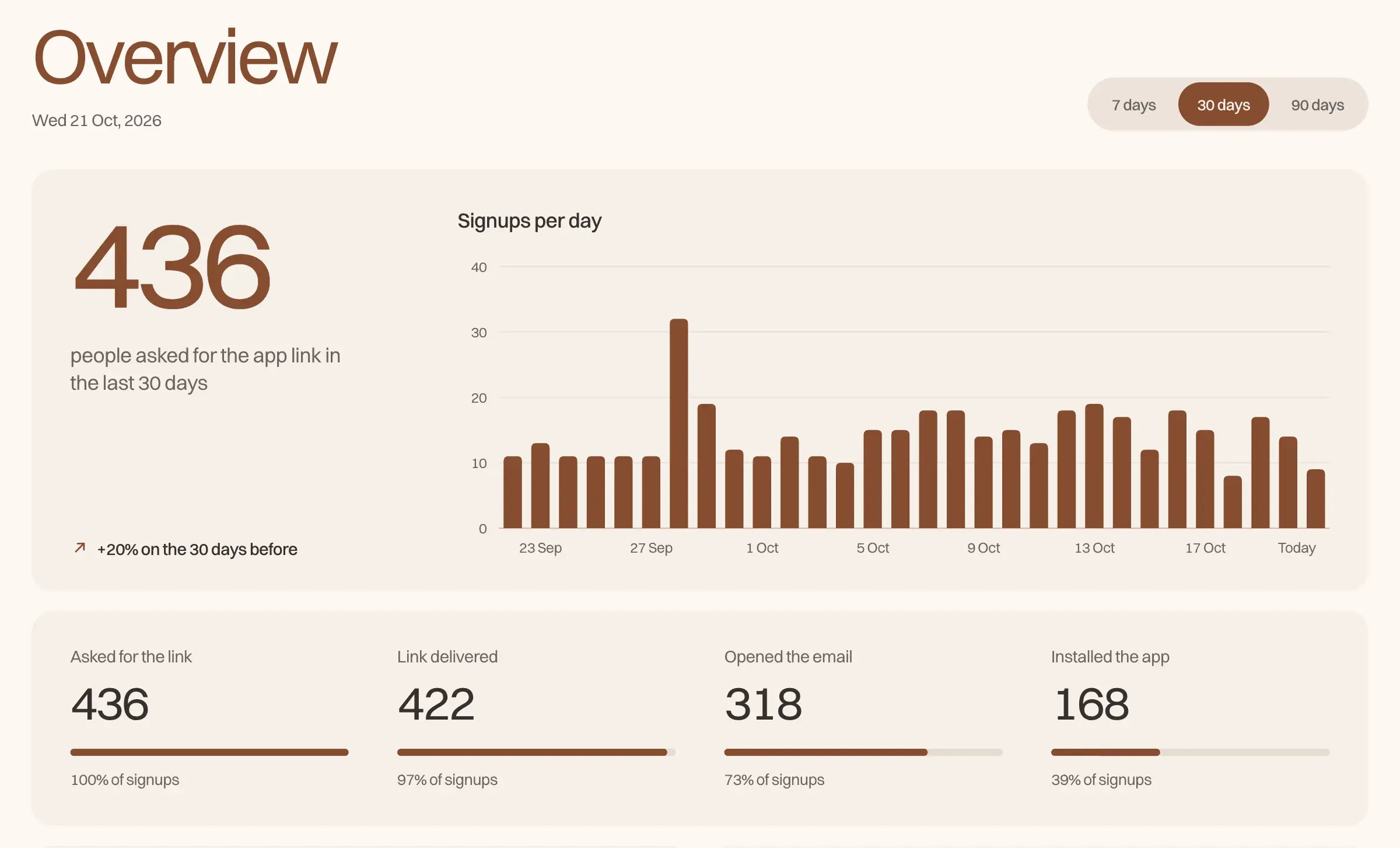
Sometimes the admin is about understanding, not editing. Alongside Fold's new website we built a back office that tracks every request for the app link, from sent to opened to installed, by day and by source. The team can see which channels lead to installs without asking an analyst.
What goes into every admin we build
- Only what changes. If it changes once a year, it can stay in the code. If it changes weekly, it gets a field.
- Plain labels. "Amount raised so far", not "appeal_total".
- Instant publishing. Save means live. No build step and no waiting.
- Safe limits. Image sizes, number formats and required fields are checked before saving, so nobody can break a page by accident.
The result is a site that stays true after handover. That's the real test of a build: not how it looks on launch day, but how it looks a year later. See the Portsmouth Muslim Academy build.
Keep reading
All notes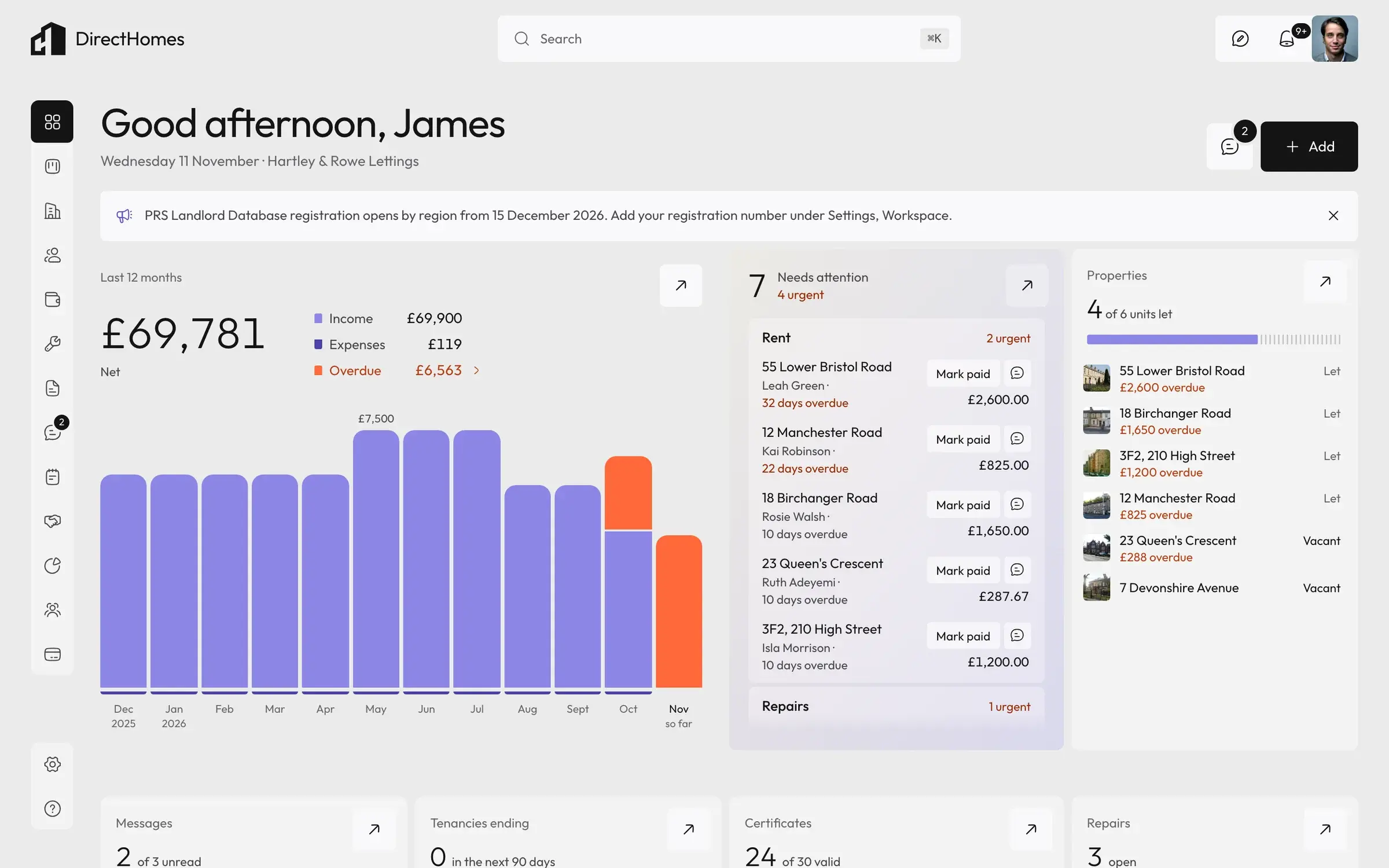
 DirectHomesDevelopment2 min read
Rebuild or patch? Four questions we ask first
When a SaaS product outgrows its first version, patching feels cheaper. Four questions that tell you when it isn't, from our DirectHomes rebuild.
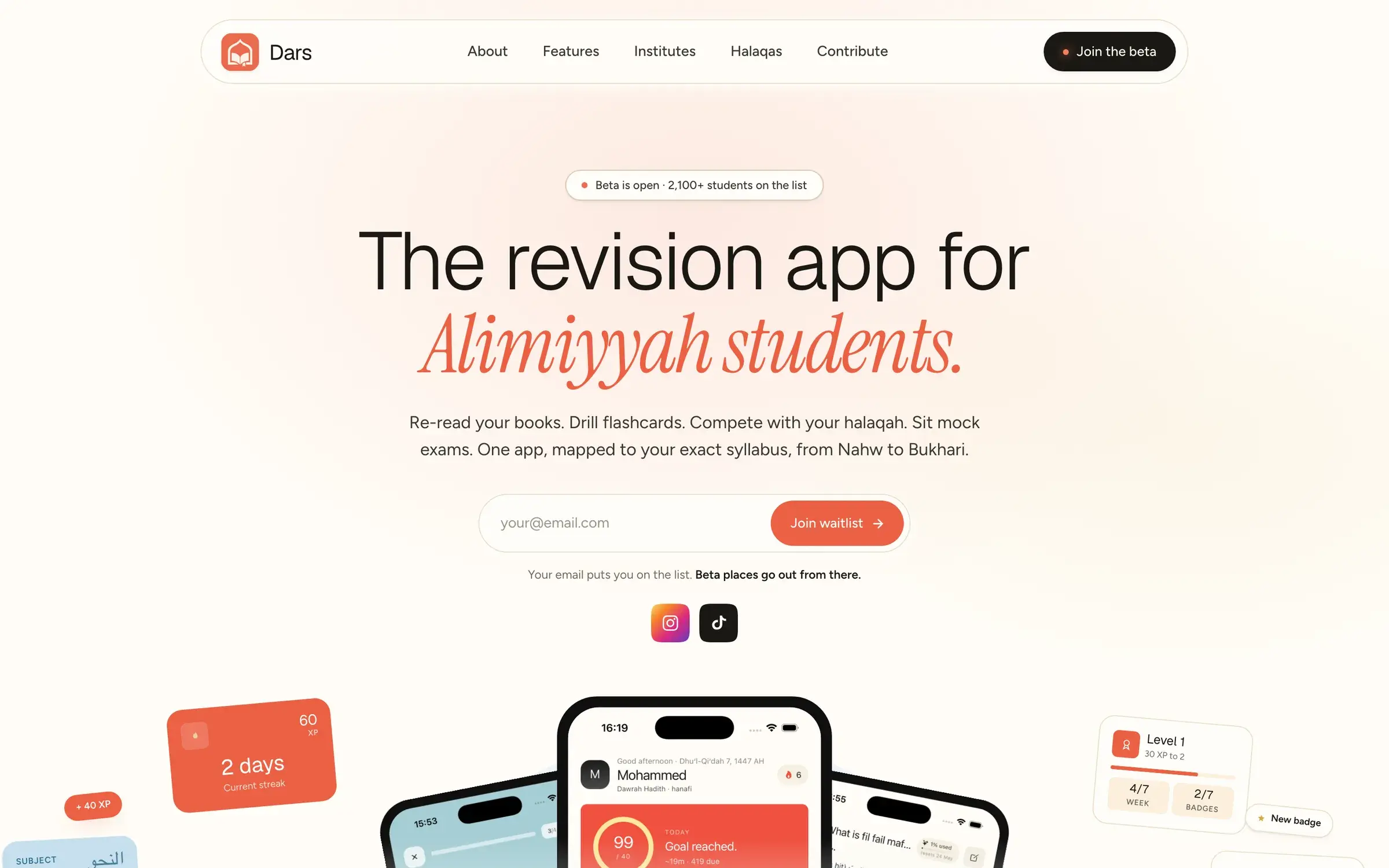
 DarsDevelopment2 min read
Right to left, done properly
Arabic interfaces need more than a mirrored layout. What we learned building Dars, a revision app with Arabic set right to left and its harakat intact.