Rebuild or patch? Four questions we ask first
When a SaaS product outgrows its first version, patching feels cheaper. Four questions that tell you when it isn't, from our DirectHomes rebuild.
- Written by
 MohammedCo-founder and CEO
- From the build
 DirectHomes
- Topic
- Development
- Published
- · 2 min read
The short version
- If the product handles money, every balance must trace back to a record.
- Permissions are hard to add late. If teams are coming, plan roles now.
- If search engines see an empty page, the site needs a new foundation.
Every early SaaS product reaches the point where its first version starts to fight back. New features take longer, fixed bugs come back, and the team works around the code instead of with it. Then comes the expensive question: patch it, or rebuild it?
Patching is usually right. Rebuilds are slow, risky and easy to underestimate. But sometimes a patch only buys a few months. These are the four questions we ask before recommending either.
1. Can it be trusted with money?
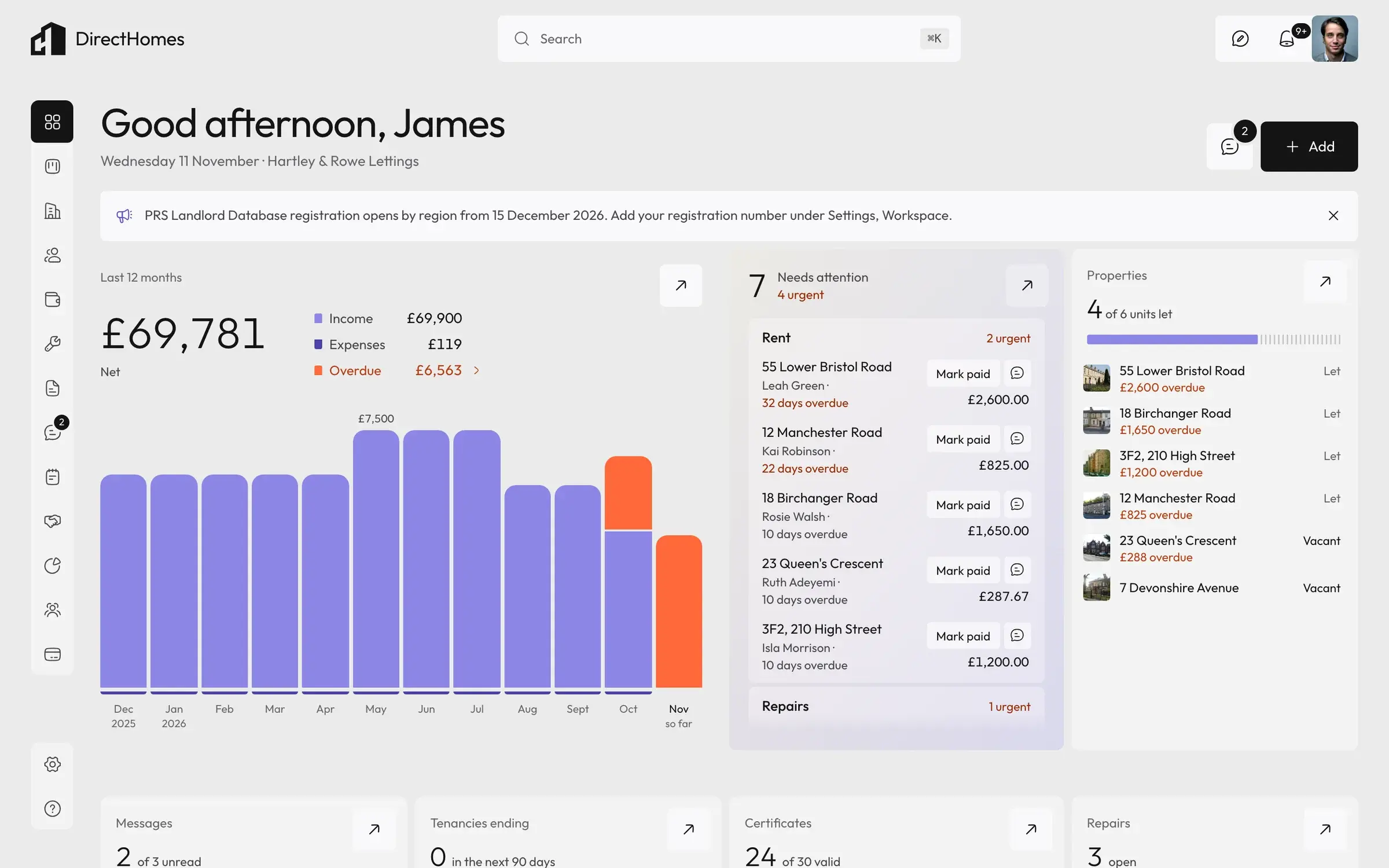
DirectHomes runs rent, repairs and certificates for UK landlords. The first version worked well as a demo, but it couldn't safely collect rent. It had no rent ledger, so there was no record of how any balance came to be.
You can't patch that in. A ledger changes how every payment, charge and arrears figure is stored. In the rebuild, every balance traces back to a ledger entry, so a landlord can always see why a tenant owes what they owe.
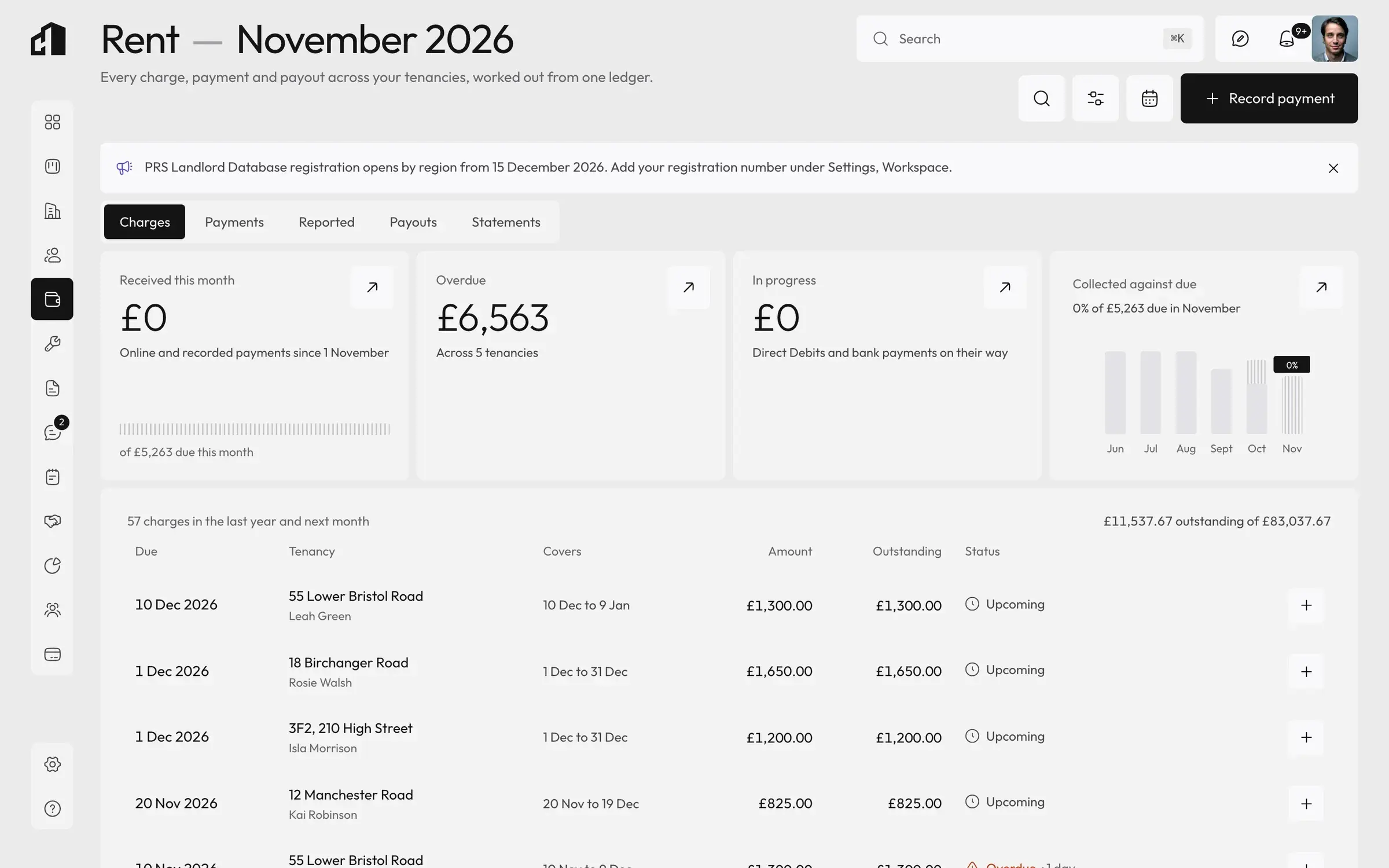
If your product touches money and you can't answer "where did this number come from?", treat that as a rebuild signal.
2. Who is allowed to do what?
The first DirectHomes had no staff permissions. That's fine for one landlord with a login, and a problem the moment a letting agent adds a team.
Roles touch every screen and every query. Added late, they leave gaps, and gaps in permissions are security bugs. If your next customers are teams rather than individuals, build roles into the foundation.
3. Can search engines read it?
Search engines saw an almost empty DirectHomes site. For a product that depends on landlords finding it, that was a growth problem dressed up as a technical one.
The new site is rendered on the server, so search engines read every word. A change like that runs through the routing, the data loading and every page template. It's rarely a patch.
4. Does the brand still fit?
A rebuild is a chance to fix what a patch can't reach. DirectHomes came out of it with a new identity: a stepped-blocks mark, a calm lilac, and one coral kept for anything overdue. Because the brand came first, the website and the app launched speaking the same language.
When to patch instead
If all four answers are fine, patch. Most products go a long way on better tests, a cleaner data layer and a few rewritten screens. A rebuild only makes sense when the problem is in the foundation, not the finish.
Not sure which side you're on? Book a call and we'll go through the four questions with you. Or see the DirectHomes build.
Keep reading
All notes
 PortsmouthDevelopment2 min read
Build the admin, so you're not the admin
If a client has to email you to change a number on their site, the site isn't finished. How we design admin pages for the people who'll actually use them.

 DarsDevelopment2 min read
Right to left, done properly
Arabic interfaces need more than a mirrored layout. What we learned building Dars, a revision app with Arabic set right to left and its harakat intact.